Best Pilates Reformer: 8 Criteria That Matter More Than Brand
Buyer-focused comparison guide
The best Pilates reformer is not automatically the most famous or expensive model. It is the machine that fits its users, provides consistent carriage travel and resistance, works in the available space, can be adjusted efficiently, and remains serviceable after purchase.
Use the eight criteria below to compare reformers on evidence rather than brand recognition. Home buyers can emphasize fit, noise and storage. Studio buyers should give more weight to repeatable adjustment, cleaning, parts supply and downtime risk.
Quick Answer: What Makes a Pilates Reformer “Best”?
1. Start With the User and Operating Environment
A reformer should be judged in context. A compact machine for one experienced home user and a studio reformer adjusted by several instructors solve different problems. Before comparing materials or accessories, define who will use the machine, how often, and whether it will remain assembled.
- Home use: consider noise, storage path, assembly, floor protection and whether frequent setup will discourage regular use.
- Private instruction: prioritize fit range, adaptable resistance and a professional adjustment workflow.
- Group studio: prioritize repeated adjustment, consistent feel across units, cleaning, service access and replacement parts.
This is why a single universal “best reformer” ranking is rarely useful. The better question is: best for which users, room and operating model?
2. Check Body Fit and Usable Carriage Travel
Overall frame length is easy to compare, but it does not tell you how much usable carriage travel a person receives. Shoulder-rest position, stopper location, footbar geometry and carriage length all influence working space.
Ask whether taller and shorter users can establish comfortable positions without reaching awkwardly or losing usable range. If possible, test the machine with the people who will actually use it. For an online purchase, request operating dimensions and adjustment ranges rather than relying on one exterior measurement.
3. Inspect the Frame, Rails and Structural Alignment
Material labels such as wood or aluminum do not prove quality by themselves. Evaluate the complete structure: rail alignment, joints, load-bearing connections, feet, finish and resistance to unwanted movement.
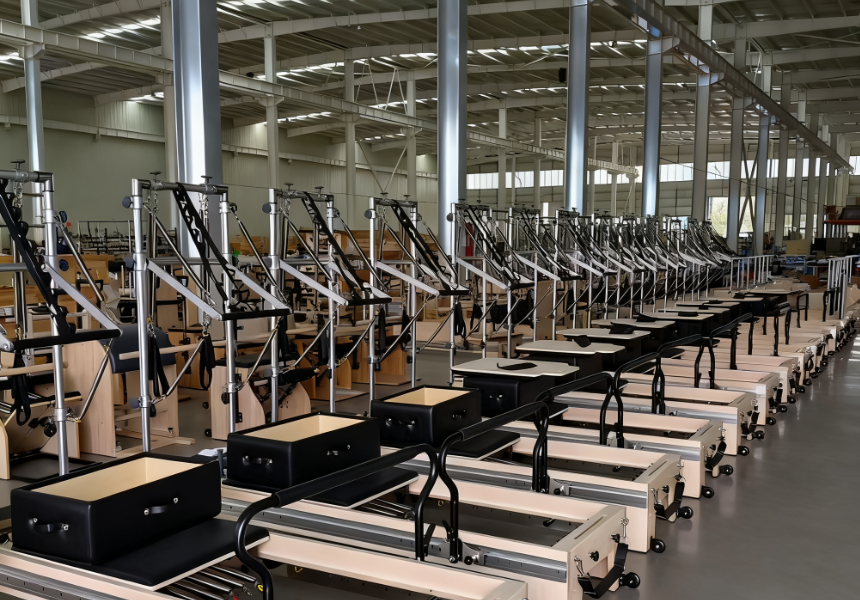
For a multi-unit order, request confirmation that the same specifications and adjustment points will be consistent across the batch. A studio benefits when instructors do not have to relearn the feel of every station.
4. Evaluate Carriage Glide, Wheels and Bearings
A reformer should not be chosen only because the empty carriage feels fast. The more useful test is whether movement remains smooth, quiet and controlled under realistic load, including slow travel and direction changes.
- Listen for clicking, scraping or sudden changes in sound.
- Check for lateral play and uneven contact along the rails.
- Ask how wheels and bearings are inspected, cleaned and replaced.
- Confirm that spare components match the exact model.
Used-equipment discussions also repeatedly recommend testing the carriage under load and checking rails, springs and frame condition before purchase.
5. Compare the Spring System, Not Just the Spring Count
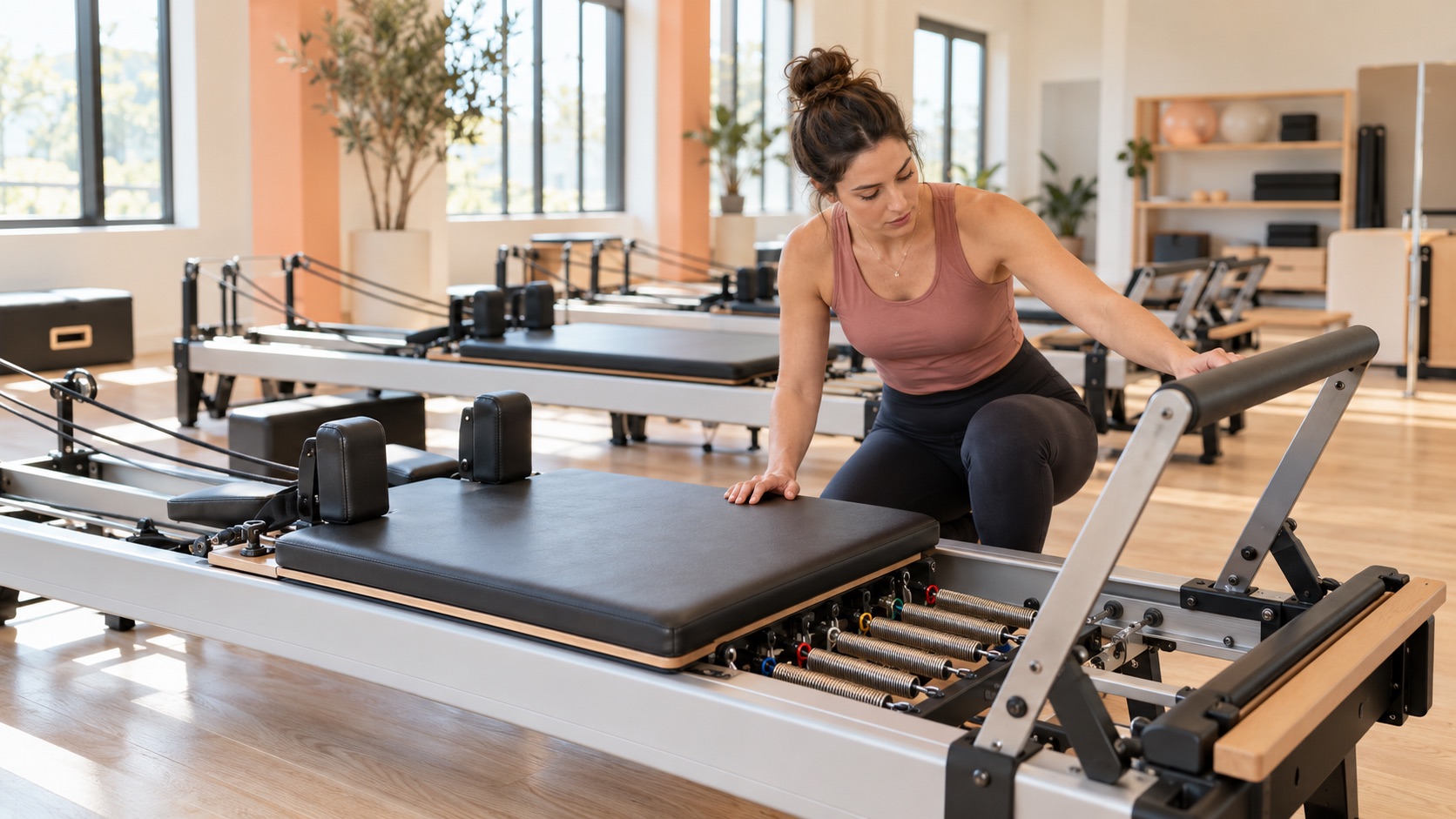
More springs do not automatically create a better reformer. Buyers need a usable range of resistance, clear spring identification, secure attachment points and a replacement plan. The same spring combination can feel different when carriage geometry, rope setup and user position change.

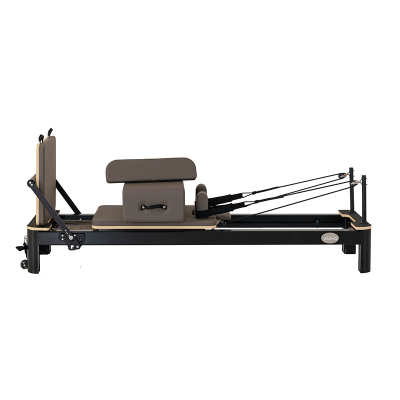
The image above comes from the Aluminum Pilates Reformer 4.0 product page, where buyers can review the complete machine and its commercial studio configuration.
6. Time the Adjustment Workflow
Footbar positions, rope length, headrest, shoulder rests and spring changes affect daily usability. An adjustment system can look sophisticated but still slow down a class if it is hard to reach, unclear or inconsistent.
For studio buying, time a full reset between two different users. Observe whether adjustment points lock positively and whether instructors can confirm settings at a glance. For home use, prioritize a setup you are willing to repeat without avoiding the machine.
| Adjustment | What to verify | Why it matters |
|---|---|---|
| Footbar | Position range, padding, lock and change speed | User fit and class transitions |
| Ropes and straps | Length adjustment, symmetry and replaceability | Consistent arm and leg work |
| Headrest and shoulder rests | Support, attachment and cleaning | Comfort and maintenance |
| Spring bar or gear bar | Secure positions and clear instructions | Resistance setup and repeatability |
7. Measure Space, Delivery and Maintenance Access
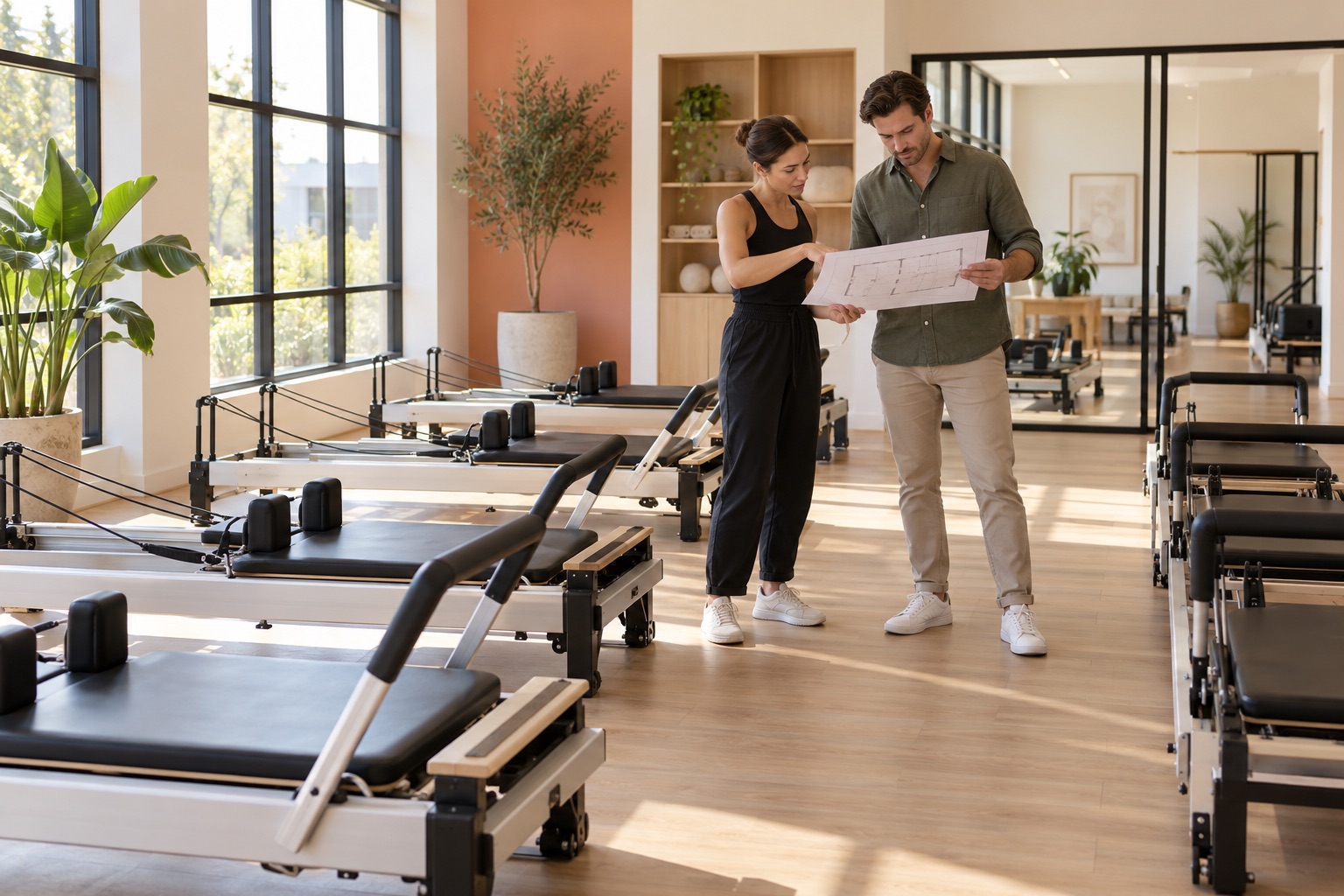
Measure the complete operating area, not only the machine footprint. Allow room for the carriage, instructor access, mounting, accessories and circulation. A foldable model still needs a realistic folding and storage path.
Before ordering, confirm packaging dimensions, doorway and stair access, unloading method, assembly requirements and who is responsible for installation. Also check whether routine cleaning and wheel or rope inspection can be performed without moving an entire studio row.
Home buyers can review Anavo’s home Pilates reformer planning page; studio buyers can compare the operational questions in the studio Pilates solution.
8. Compare Parts, Warranty and After-Sales Support
A reformer is a system of structural parts and wear components. The purchase decision should include the availability of springs, ropes, straps, wheels, bearings and upholstery components, plus model-specific manuals and service contacts.
Read warranty terms for the intended use. A home-use warranty may not cover commercial operation. Ask what evidence is needed for a claim, who performs diagnosis, how replacement parts are shipped, and whether technical support is available after installation.
Home vs. Studio: How the Priorities Change
| Criterion | Home buyer emphasis | Studio buyer emphasis |
|---|---|---|
| User fit | Personal comfort and goals | Range across different bodies |
| Space | Footprint, noise and storage | Spacing, circulation and class capacity |
| Adjustment | Simple repeatable setup | Fast changes between clients |
| Durability | Expected weekly use | Frequent daily use and cleaning |
| Support | Assembly and replacement guidance | Batch consistency, parts and downtime response |
A Five-Step Buying Process
- Write the use case: users, frequency, teaching style and expected lifetime.
- Measure the room: operating footprint, access, circulation and storage.
- Shortlist by specification: fit, travel, resistance, adjustments and serviceability.
- Test or verify: use a sample, demonstration, video inspection or documented checklist.
- Confirm support: included accessories, warranty, manuals, replacement parts, delivery and after-sales contacts.
If you are still defining the machine itself, begin with What Is a Pilates Reformer? A Buyer-Focused Guide, then browse the current Pilates reformer range by use case and configuration.
Frequently Asked Questions
What is the best Pilates reformer for home use?
The best home reformer fits the user and available room, operates quietly, can be set up consistently and has clear parts and support information. A foldable design is useful only when the folding and storage process is realistic for the buyer.
What is the best Pilates reformer for a studio?
A studio reformer should accommodate different users, support fast and repeatable adjustments, remain easy to clean and provide reliable access to replacement parts and technical support.
Is an aluminum reformer better than a wooden reformer?
Neither material is automatically better. Compare the complete frame construction, alignment, carriage system, finish, serviceability and suitability for the room and operating model.
How can I judge reformer quality before buying online?
Request operating dimensions, adjustment ranges, spring details, model-specific manuals, parts information, warranty terms and evidence of pre-shipment checks. A sample or live video inspection can reduce uncertainty for larger orders.
Should every reformer in a studio be the same model?
Using the same model can simplify instruction, adjustment, maintenance and spare-parts planning. A mixed room can still work when there is a clear reason for each configuration.