What Is a Pilates Reformer? A Buyer-Focused Guide
Pilates Reformer Buyer Guide
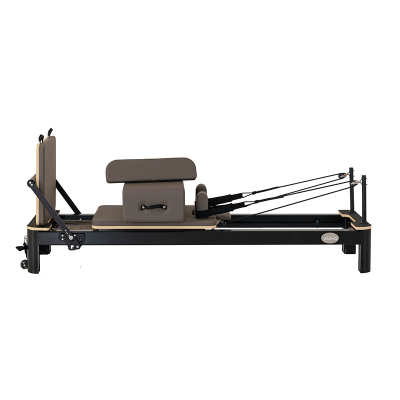
A Pilates reformer is a spring-resistance exercise machine built around a sliding carriage, frame, footbar, shoulder rests, ropes and straps. By changing spring tension and body position, the machine can add resistance, provide assistance and support controlled exercises for strength, mobility, balance and coordination.
What Are the Main Parts of a Pilates Reformer?
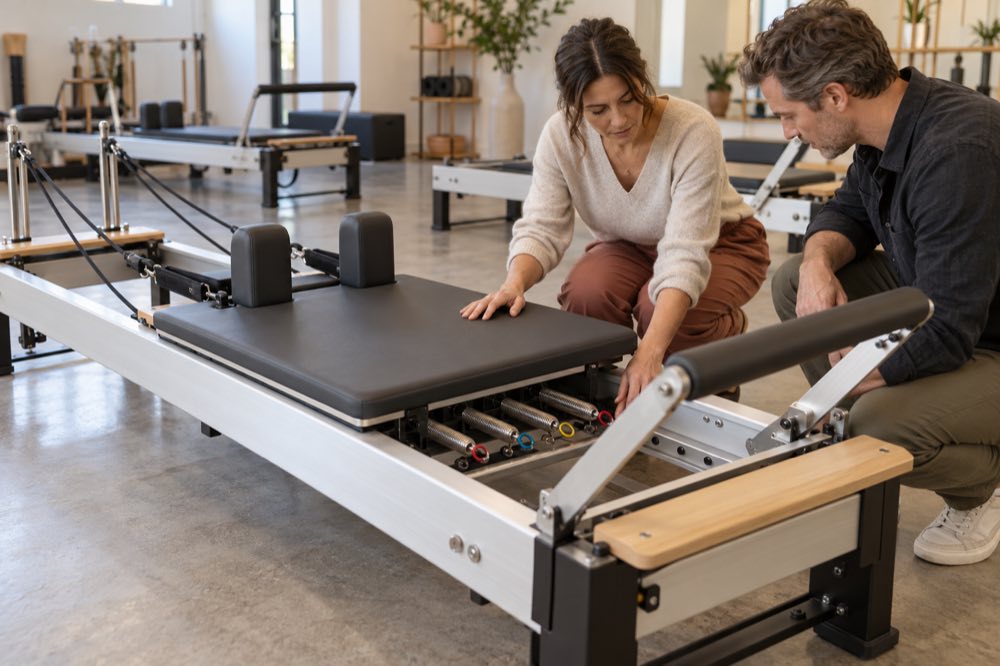
For someone taking a first class, a reformer may look like a padded platform on rails. For a buyer, it is better understood as a connected movement system. The frame holds alignment, the carriage controls travel, the springs create load, and the adjustment points determine how quickly the machine can be adapted to different users.
Frame and rails
The structural base and track that guide the carriage. Inspect alignment, joint quality and whether the machine stays stable during changes of direction.
Moving carriage
The padded platform that travels along the rails. Its wheel and bearing system influences glide, sound and the feeling of control.
Springs and spring bar
Springs provide adjustable resistance. Different combinations change how much force is needed to move or control the carriage.
Footbar
An adjustable support used by the hands or feet. Position range, padding, locking method and adjustment speed matter in shared studios.
Ropes, straps and risers
These connect the user to the carriage system for arm and leg work. Check adjustment method, hardware and replaceability.
Shoulder rests and headrest
These support positioning on the carriage. Comfort, cleanability and secure attachment matter for repeated use.
How Does a Pilates Reformer Work?
The user moves the carriage while controlling tension from one or more springs. Springs can make a movement harder by resisting carriage travel, but they can also support a movement by helping return the carriage or reducing how much body weight the user must control.
This is why “more springs” does not automatically mean “more advanced.” The direction of movement, body position and exercise goal all matter. The purpose is not simply to push the carriage as far as possible, but to control the full movement.

What Is a Pilates Reformer Used For?
Reformer sessions can be programmed for strength, mobility, coordination, balance and controlled movement. The equipment offers many exercise positions and adjustable resistance, so an instructor can adapt a session to experience level and training goals.
Reformer Pilates vs. Mat Pilates
| Decision point | Mat Pilates | Reformer Pilates |
|---|---|---|
| Main resistance | Body weight and small props | Body weight plus adjustable springs |
| Movement support | Limited equipment assistance | Springs and straps can assist selected movements |
| Space and setup | Minimal | Dedicated machine footprint and access space |
| Exercise variation | Broad mat repertoire | Broad repertoire across multiple body positions |
| Best choice | Portable, low-equipment practice | Adjustable resistance and equipment-based programming |
Neither format is universally better. The more useful question is which format matches the users, teaching method, space and operating model.
What Types of Pilates Reformers Can Buyers Choose?
Home reformers
Home buyers usually prioritize footprint, storage, noise, ease of setup and personal fit. A compact or foldable design can help in a shared room, but the storage mechanism should not compromise stability or make the machine inconvenient to use regularly. See Anavo’s home Pilates reformer solution.
Commercial studio reformers
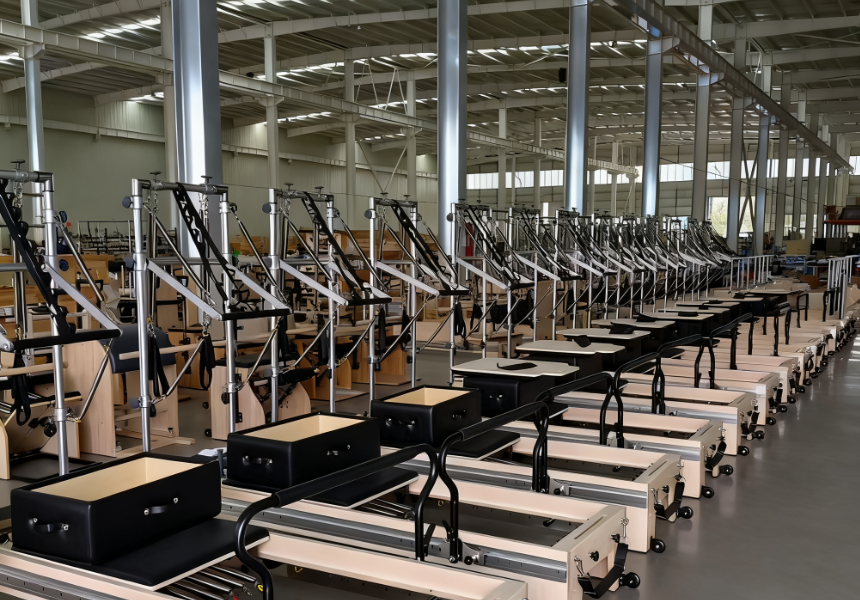
A commercial reformer is expected to accommodate different bodies, instructors and class formats. Adjustment speed, repeatable carriage feel, cleanability, spare parts and after-sales response become more important as daily usage increases. Anavo’s studio solution covers equipment selection, layout support, customization and installation guidance.
Reformers with tower
A tower adds a vertical frame, springs and attachment points, expanding the exercise repertoire without requiring a separate Cadillac table. Compare ceiling clearance, stability, included components and how the tower affects room layout.
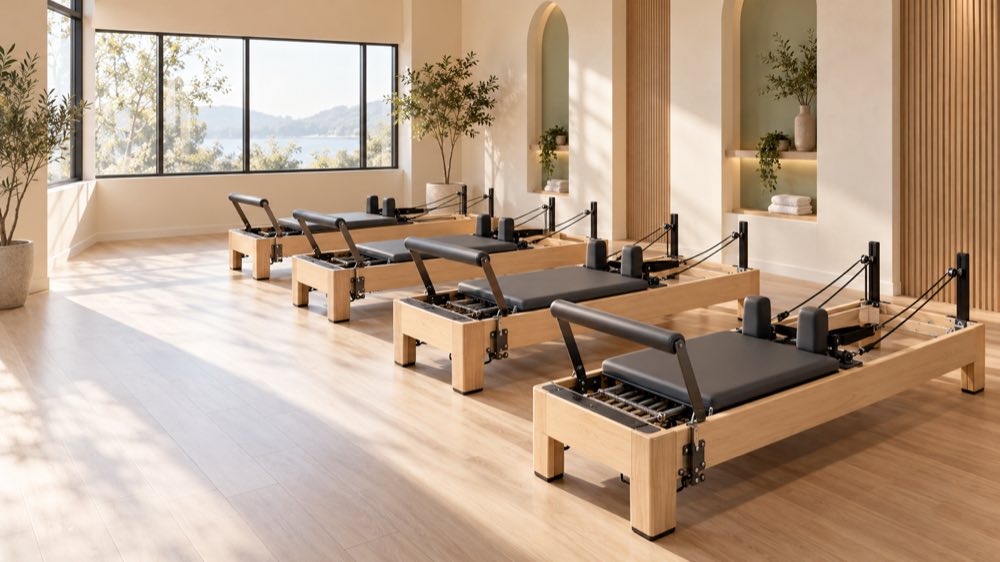
Wooden and aluminum reformers
Material influences appearance, weight, construction method and the way a machine fits into a studio concept. Do not use material alone as a shortcut for quality. Compare the complete system: structural alignment, carriage travel, hardware, finish, service and documentation.
What Should You Compare Before Buying?
- User and environment: define who will use the machine, how often it will be adjusted and whether it will serve one person or a rotating class schedule.
- Frame stability: ask how the frame, rails and load-bearing connections are produced and checked.
- Carriage travel: look for consistent movement without catching, lateral play or abrupt changes.
- Spring system: confirm the supplied springs, resistance identification and replacement availability.
- Adjustment points: try the footbar, headrest, ropes and shoulder rests.
- Maintenance: request cleaning instructions, inspection steps and a wear-parts list.
- Documentation: request the model-specific manual, parts diagram, warranty terms and applicable test documents.
Home or Commercial Reformer: Which Is Right for You?
| Question | Home buyer | Studio or commercial buyer |
|---|---|---|
| Primary objective | Personal fit, convenient use and storage | Repeatable experience across users and classes |
| Adjustment pattern | Usually configured for one or a few users | Frequent changes by multiple instructors |
| Space decision | Footprint, access and storage path | Machine spacing, circulation and class capacity |
| Operational priority | Comfort, noise and likelihood of regular use | Durability, cleaning, parts, downtime and batch consistency |
| Supplier discussion | Delivery, assembly and personal configuration | Samples, layout, customization, logistics, spare parts and service |
Questions to Ask a Pilates Reformer Supplier
- Which parts are considered routine wear items?
- How can we order replacement springs, ropes, wheels and upholstery components?
- Are the manual and parts diagram specific to this model?
- How is carriage alignment and movement checked before shipment?
- What customization affects lead time, maintenance or replacement compatibility?
- What is included with the machine, and what is optional?
- How are transit damage, installation questions and technical issues handled?
- Which test or certification documents apply to the exact product and destination market?
Frequently Asked Questions
What does a Pilates reformer do?
It uses a moving carriage and adjustable springs to add resistance or assistance for exercises involving strength, mobility, coordination and balance.
Is a Pilates reformer suitable for beginners?
It can be, provided the user receives appropriate instruction and the machine is adjusted correctly.
Can you use a Pilates reformer at home?
Yes. Confirm the operating footprint, access space, storage method, assembly requirements and support available.
What is the difference between a home and commercial reformer?
Home models usually prioritize personal use, footprint and storage. Commercial machines are selected for frequent adjustment, multiple users, cleaning, serviceability and parts availability.
Which reformer parts may need replacement?
Wear depends on design and use, but buyers should ask about springs, ropes, straps, loops, wheels, bearings and upholstery components.
What should a studio check before ordering several reformers?
Confirm a sample or specification, room layout, adjustment workflow, batch consistency, accessories, installation, warranty, spare-parts supply and after-sales contacts.
Choose for Fit, Consistency and Long-Term Support
The best reformer is not simply the machine with the longest feature list. It is the one that fits the users and room, moves consistently, can be adjusted efficiently and is supported with clear documentation and replacement parts. Buyers planning a studio or private-label project can review Anavo’s Pilates equipment range or contact the team with room dimensions, expected users and target quantity.